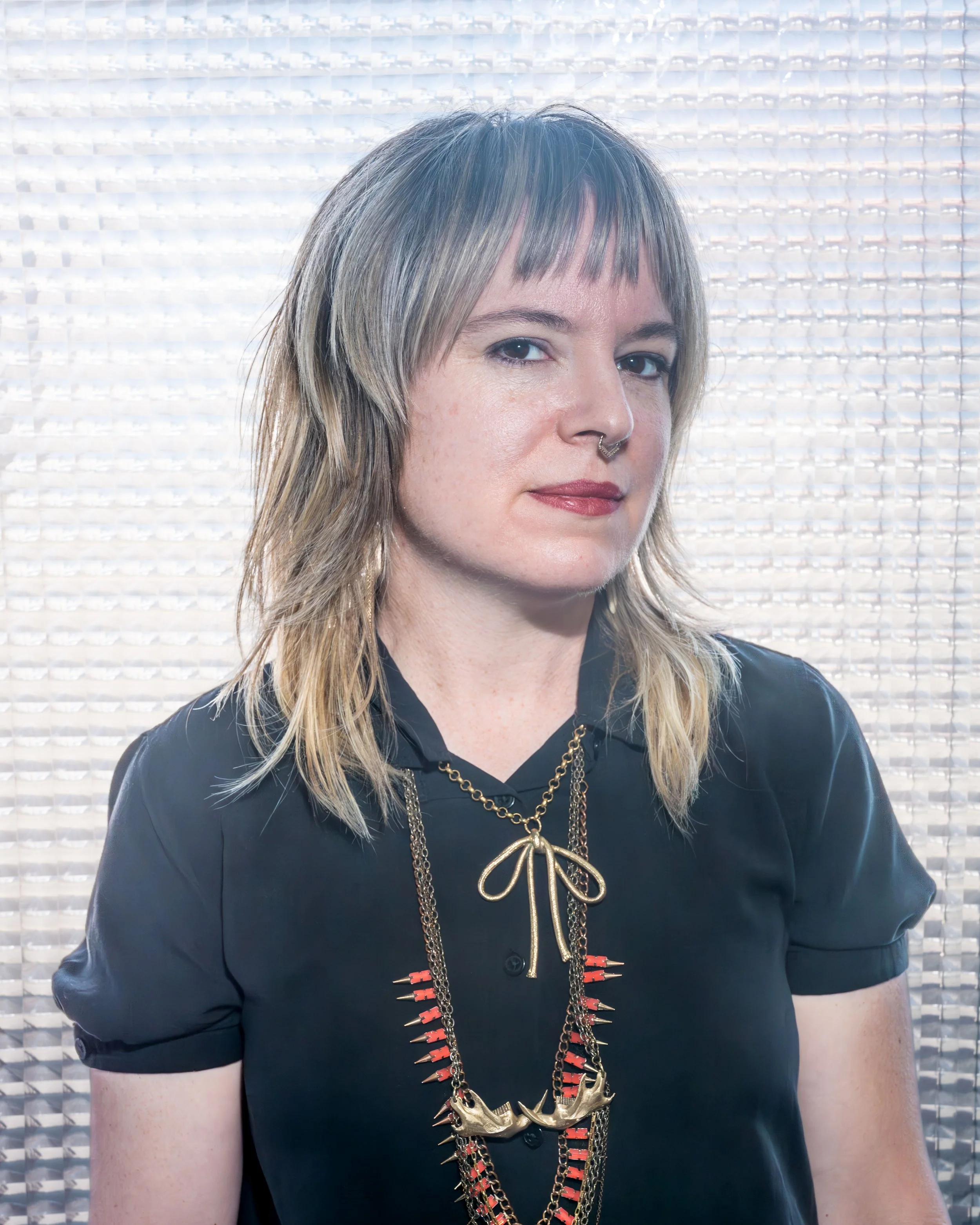
||| BIO
Megan March is a Bay Area based interdisciplinary artist working in ceramic sculpture, sound, performance, and 2D media. Her work explores narratives within the body and the land through the transformative nature of clay and acoustic percussion, topography as anatomy, and the potential of emptiness.
March received her BFA in Music, Studio Art, and English from Mills College, where she received the Maurthea Friedburger Cup, awarded to The Most Distinguished Music Major, the Hellerman Music Scholarship Award for both Percussion and Guitar, and the Presidential Scholarship. March has released albums and toured much of Europe and North America with her musical projects, pushing the boundaries of performance, form, and genre. In 2025 March exhibited work at ICA SF, Root Division, the Wattis Institute, and San Francisco’s Milton Marks Library, among others. Most recently March graduated with a Fine Arts MFA from California College of the Arts where she received the California College of the Arts 2026 Thesis Award, and the 2026 Ted Purves Award for Social Practice. Thriving on the physicality of sculpting and percussion, on any given day you can find March in her studio using her hands to form clay or sound.
Photo By Heather Freinkel, 2025
||| ARTIST STATEMENT
||| BODIES AND THE LAND
A near-death experience during childbirth at an understaffed hospital fuels my focus on the connective tissue of fragility and resilience between human bodies and the body of the land. I sculpt these forms in clay—an ideal, volatile, and imperfect medium—to explore the visceral feelings, landscape of the body, and geographical narratives of violence and healing. When several of my bodily vessels are percussively activated, sound and acoustics become sculptural elements that galvanize the presence of emptiness as potential.
Skin Impressions is a recent series which marks the passage of time while standing firmly in the present. My material approach is experimental. By taking a slab of clay and using my body to press it into scar-like roadcuts at the edge of new tract home developments, the clay functions as a photograph in order to capture a physical image of the bay area's rich geologic stratigraphy. Impressions of exposed ancient fossils appear, as well as living tree roots that connect the earth to keep it from crumbling.